I’ve never been sure about my attitude towards travelling. I certainly like being there. Exotic places are breaths of fresh air to my soul and an inspiration to my brain. But the excitement of experiencing a new environment has to compete with the anxiety of getting there.
If I can, I drive. Driving gives a sense of the scale of dislocation and allows me to forget everything but the present moment. Trains are not too bad either. Free from any responsibility for your own safety or that of others, you can drink yourself into a total stupor and wake up to find yourself at your destination with less pain than the hangover brings.
But I loathe airports.
A week prior to departure my mounting exhilaration gives way to a sense of impending doom. Not only will I have to do something so contrary to nature as to be transported through the air. I’ll also have to endure the frustration and humiliation of endless checks.
So, having survived the challenge of Heathrow, I’m not looking forward to renewing my acquaintance with officialdom at Banjul Airport. There, we have been warned, we will have to struggle through Covid checks, immigration tax payment, landing card checks, immigration and customs, including a final scan of luggage.
I needn’t have worried.
*
We walk from the plane into a room the size and space of a small hangar, queue for a short while to pay our tax, give our stamped passport and landing card to an official, leave thumbprints all over the place and then collect our luggage. We are the only flight so the bags are already waiting for us. It’s a short walk to the scanner, and the customs officer is chatting away to a friend. As recommended by the travel agency’s exhaustive guide, I change money there rather than at the hotel (‘a better rate’, quote from the guidebook and the money changer) and stuff the wads of dirty notes into various pockets.
On the way to the bus our baggage is wrested from our hands and wrestled over by a number of porters. The oldest and frailest-looking emerges victorious and leads us to a minibus where his friend is waiting. Bearing correction with fortitude, he leads us to the officially provided air-conditioned bus. In the meantime we have lightened our pockets of all our loose foreign change by tipping the porter, his immediate and extended family, the disappointed minibus driver, a number of people in wheelchairs, a drinks vendor, our official guide, the official bus-driver and a number of baggage handlers who have supervised the loading of the luggage.
When the last of the passengers have also been loaded, we set off for our hotel.
The route snakes either side of and across a superhighway still under construction. We learn from the courier that the main export of the Gambia is peanuts and, in the absence of any mineral resources, the main (or only) industry of the country is tourism. The houses that we pass are the usual mixture of buildings in the process of construction or dilapidation. The roads are lined with people selling mountains of fruit from barrows and shops advertising anything from solar panels to car body parts. The body shops must do a roaring trade. The dirt roads are littered with bits that have fallen off passing vehicles.
But the people we pass seem animated. Most are engaged in good-natured and loud discussions with vendors, friends and the numerous traffic police. Admittedly, there are a few people striding purposefully down the street with a determined go-getting glint in their eye. But most people appear to have realised there is more to life than determined go-getting and glinting.
Eventually, we are disgorged outside our hotel where we are met by a receptionist who looks as if he would rather be out passing the time of day in animated discussions on the street than checking in fat and bleached tourists. While we wait, I check the exchange rate advertised. It is identical to that offered at the airport. And the notes are cleaner.
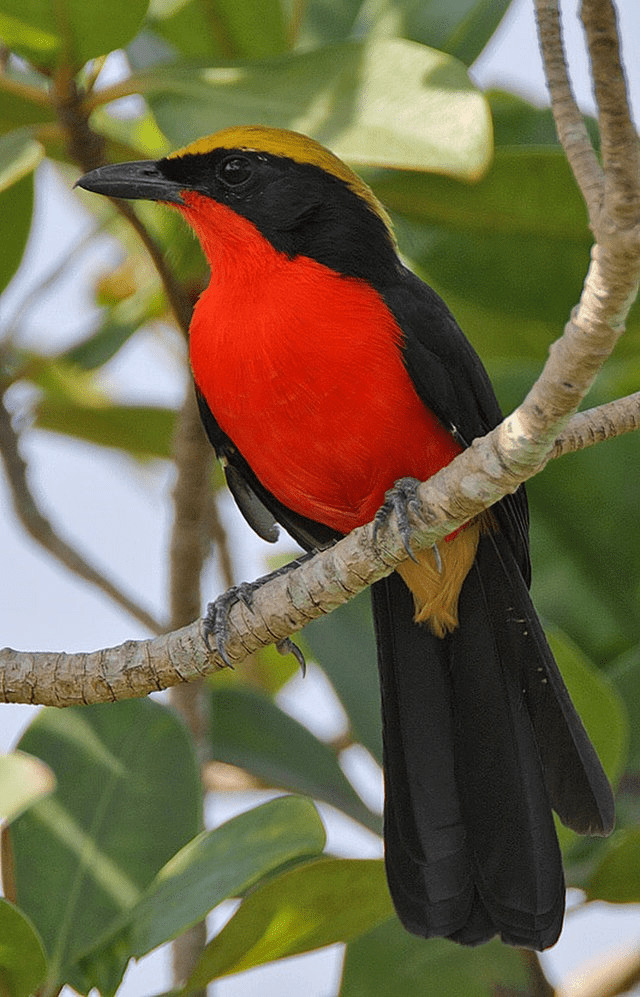
We stay here for our first week, birding and beaching. The first of these is limited by the fact that the hotel is in an urban area. Any attempt to venture out at the front results in the descent of flocks of non-ornithological vultures. Or leeches, if you prefer. My wife, Ani, prefers. Intelligently designed to swoop on anyone pallid enough to be fresh off the plane. The touting is good-humoured, but wearing in its persistence. On offer are anything from tours to taxis to tarts.
Guide-book: ‘Never say “maybe tomorrow”. That only encourages them to come back.’
But if you don’t say “maybe tomorrow”, they never leave.
The rear of the hotel is more promising. There is an area of wasteland where trees grow and guerrilla farmers have carved little plots of horticulture out of the intervening scrub. And once you’ve escaped the clutches of the beach juice sellers (side-lines in tours, taxis and tarts), you find yourself among people that politely pass the time of day. The minimum is ‘Good morning’. The full litany consists of ‘What is your name? Where are you from? Welcome to the Gambia.’ For the most part, they are not after your money – just someone different to talk to. Or show off their crops to. As wall-eyed Pap does in somewhat manic fashion. Or proclaim their calling. As raffish Bubba does, producing a card announcing he gives djembe drum lessons, before inviting us back for tea. Others are coyer about their vocation. It took Maimouna a few minutes of pleasant conversation before she solicited me. Her Rasta pimp looked on with an amused smile on his face.
After a few days, it even becomes safe to walk out the front without fear of being infinitely waylaid. By now, the touts all know our names, and salute us as if we are friends of long standing. So we sample some of the nearby restaurants. The food is uniformly delicious – personal favourites are dodomá, a peanut-butter-based spicy sauce capable of containing whatever you wanted, and fufu, a Ghanaian stew rich in chilis and tomato.
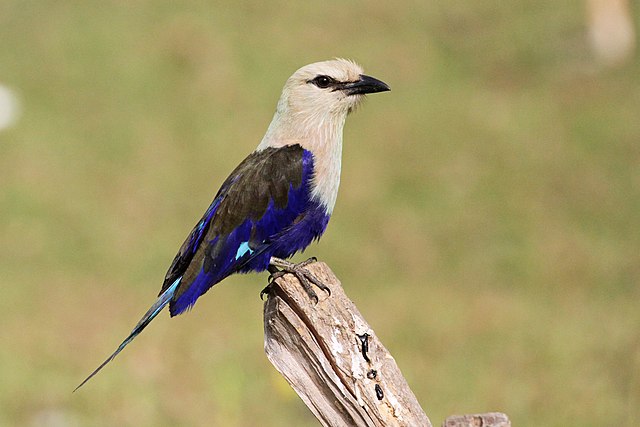
Finally it’s the day of departure for our birding tour. The pick-up happens on time, which is a surprise, and is accompanied by a hug from our guide. He is accompanied by the Fleming that has arranged our bookings. I shall call the guide ‘Omar’ and the Fleming ‘Jan’ for ethical reasons, ie for fear of laws suits or vengeance.
We are driven out to the first lodge, Mandinari, close to the wetlands at the mouth of the Gambia River. The accommodation is basic, meaning that the toilet cistern takes two hours to fill and the shower drain is blocked. The latter is fixed on request by the amiable gangling dreadlocked manager. The former is a matter for Allah and African time. The other peculiarity of the cabin is that it has a round double bed, which ensures we have to sleep with one foot on the ground.
When we return to the communal area, we pay our guide who promptly disappears (Jan: ‘Just got off a tour, poor chap’) and we are consigned to a local guide. Later Jan announces a change to our itinerary for the second day of our stay there. As it turns out, this involves us taking a short birding walk and then sitting for hours in a restaurant overlooking the mangroves with another bored tour couple, along with Jan’s family who apparently wanted a day out.
Still, the birds are wonderful and the djembe concert put on by the staff on our last evening is an unexpected delight with frenzied contortions from the cook.
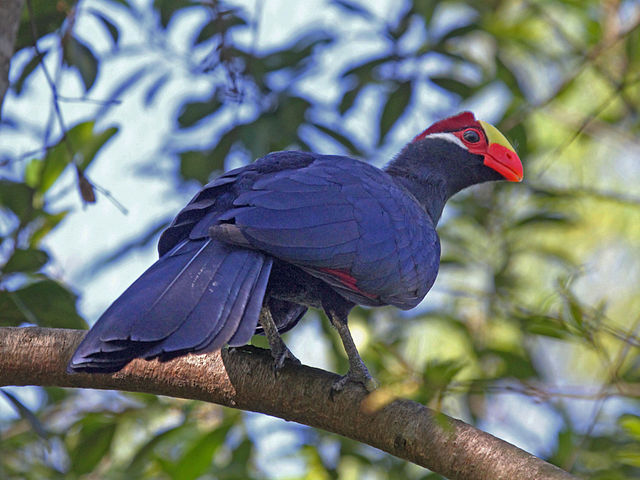
The next day we head away from the coast towards our next lodge at Bintang. Omar is now all ours. In theory at least. He has managerial responsibilities and spends much of the guiding time trouble-shooting on his mobile. Or just looking at it waiting for it to ring. We guess he is stressed out. Or perhaps he is just bored. But when he puts his mind to it, he has a good eye, and can identify the birds he expects to be in a given environment. But it’s a while before he reveals these talents. En route to our lodge, we stop at an area of scrub and forest, where we meet up with a young guide.
‘I’m training him,’ Omar says. ‘For free,’ he adds.
The training involves Omar heading off to ‘park the car’ and leaving us with his trainee for nearly an hour. When he comes back, he points out all the birds we have already seen and identified. Then takes us into the reserve proper, where we watch beautiful birds as we sit in front of feeders. Meanwhile, Omar chats loudly in Mandinka with a friend he ran into on the way in. The ‘trainee’ more than compensates and I’m drifting off into some kind of birding nirvana when I suddenly jump out of my skin. There is a shriek that appears to come from right next to me and is so loud that it could only come from a bird as large as a dinosaur. Without warning Omar has suddenly produced a bluetooth speaker, placed it at the front of the seats and play-backed at full volume to attract some bird.
No bird appears, so we get the sign to move off. Which is a bit of a shame. We are both hungry and this is a lovely place for a picnic. But it turns out Omar has forgotten about food. Only when he is reminded we haven’t had lunch does he pull in at the side of the highway and give us some of the wonderful tapalapa bread and an open tin of sardines. The resulting sandwich tastes fine but the traffic is loud.
Back in the car again, we can’t help noticing how good the road is. I expected dirt roads to take us inland. Omar claims that it is this quality all the way to the eastern border with Senegal. The same goes for the road north of the river, and the highway that crosses them both linking the shortest points between north and south Senegal.
That might need explaining if you’re not familiar with the geography of the area. Gambia is the sardine in a Senegal sandwich. It is the smallest country on mainland Africa, consisting of a narrow stretch of land rarely extending more than a few miles either side of the Gambia River, which it follows for most of its course. So the quickest way to get from north to south Senegal is to cut across the filling.
No matter how good the roads, however, progress is leisurely. We pass through every village on the south side of the river. At one point we are halted by a huge procession of women walking up the road. It turns out that they are walking the Imam home after prayer.
‘Is this usual?’ I ask Omar.
‘No, he is also a fortune-teller,’ he replies.
So now we know.
Progress is further reduced to a sedate African pace by the barriers placed halfway across the road at the entrance to each village. They consist most often of old tyres and high vis vests to make us slow down. Followed in each case by a police check. Or an immigration check. (Omar: ‘Big problem with marijuana from Senegal. I try once, See pink elephants.’) Or a military check. Or all three. We can’t imagine anyone wanting to invade. So we assume it keeps people in gainful employment. There are shakedowns but they are rare and very good-humoured.
Our lodge at Bintang consists of cabins on stilts over a tributary of the main river. Not a right angle in site, but undeniably quaint. At dinner, there is a waitress with a Carey Mulligan smile and a menu. But we find Omar has ordered for us. Fish and chips. Very nice, but it is beginning to pall.
The birding, as usual, is great. We begin to understand Omar’s MO. When he has identified a bird he will announce it to us, and then keep on repeating it until we say the name back to him. This is helpful. ‘Western red-billed hornbill’ can be difficult to pick up in African English. But we have to say the name exactly as it is delivered. A mere ‘hornbill’ is not enough. Otherwise he repeats it until we get it right. This procedure is followed even if we ourselves have spotted and identified the bird first. In a similar style, if you say something Omar finds funny, then he will repeat what you have said at least three times until he has claimed the line for his own.
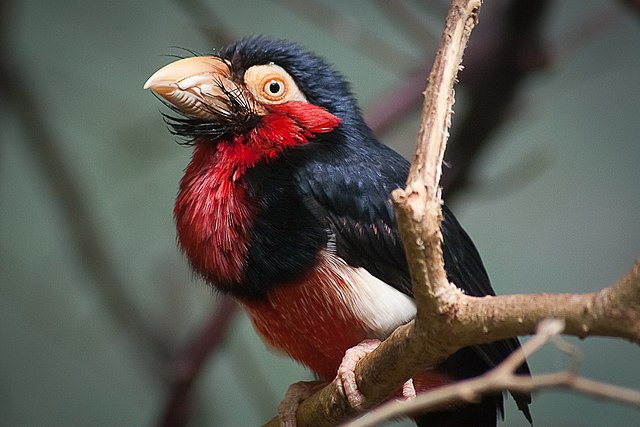
Next stop is Tendaba camp on the Gambia River itself. This was set up as a hunting lodge by a Swede. So there’s a connection. And not the only one. It was also a Swede, called Bertil Harding, who established the Gambia as a tourist resort, though these days we have been overtaken by Dutch, Belgians and international sex tourists.
We look around. The place is in need of some repair. Which it is in the process of getting. As at the previous lodge, our river sunsets are disrupted by hammering and sawing. But our cabin is the best yet. Almost everything works. The staff are friendly. Especially a broad-hipped bar-lady with a flirtatious smile who looks like she’s just auditioned for the house Mama role in ‘Gone with the Wind’. The other tourists are less attractive.
Next day we take a boat trip and see dolphins. ‘River dolphins?’ I ask. No. The river is so strongly tidal that the sea flows up it for almost 100km.
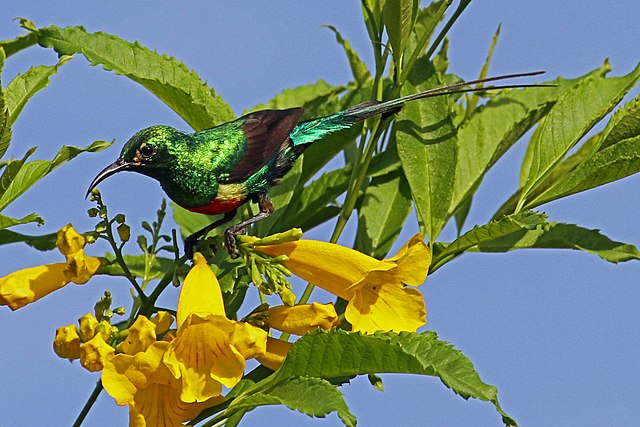
The long journey to our next stop is broken in several places. By now we are getting used to the usual sequence of highway and villages with single-storey flat-topped mudbrick houses, waving schoolchildren, carpenters working at the side of the road working on elaborately carved and grotesque double beds. And police checks. But now we stop in a town of some size with a busy market, Jarra Soma. Omar has to get in some provisions for our picnic lunch. He disappears for an hour. We are entertained by a severely stoned middle-aged Senegalese. In a mixture of at least three different languages he asks whether we would like to buy the pair of shoes he is carrying. When we politely decline in one language, he stands in front of the car and tries to roll a joint while still holding the shoes. Having done so, he places the shoes on the bonnet of the car and tries without success to sell them to other passers-by.
He is not the only one trying to sell us things. But the vendors are not at all aggressive and a ‘no, thank you’ is usually taken for what it means.
We travel farther along the south of the river, then cross by bridge over to a town called Georgetown aka Janjanbureh, on Janjanbureh Island aka McCarthy Island. From there we need to cross the remaining stretch of river. The only way to do this is by a tiny ferry. When it arrives, Omar steers the car carefully into place. Then juggles for position with a lorry. Then another, until we are wedged between the bulwarks and the bilges and the ferry is at full capacity.
That is easy compared with the roll-off on the other side, since we are pretty much stuck. It is only after some guidance from the captain and a deckhand that we emerge onto dry land. The ordeal had not been made easier by the two parties contradicting each other at intervals. But it has been fun and educational. The captain has been giving audible subtitles in English to his Mandinka. After the crossing, I find I can now carry out an extended conversation in Mandinka as long as it goes something like this:
Q: Inumbara? (How’s it going?)
A: Aría dómini dómini, abaráka. (Backwards very slowly, thank you.)
This inspires me to learn more. I try to coax Omar into teaching me a few other useful phrases. But he is not inspired to teach me and soon loses interest.
Finally, after heading back along the north bank we arrive at Kairoh Garden, Kuntaur. There is more of Cairo here than garden. It is another building site. This time the welding and hammering are still going on at 10pm. I search out the lodge manager and ask how much longer. He looks down his nose and says they are just discussing that. Discussions can take hours here. You can only admire how much they find to talk about. I return to the Venus fly trap of a bed and the hammering stops. I take it they have finished discussing the matter.
Next day we boat back upriver. Again Omar lapses into a mobile phone coma. So Cap’n Keba points out the birds, and monkeys. Briefly Omar rouses himself to network (‘Thank you very much, Paul, very important here, networking’) with the otherwise redundant Nature Reserve guide we pick up en route. Before long, we spot the chimps. A few years ago a couple of ladies decided to save some pet chimpanzees. The Gambian government leapt at the chance of creating a tourist attraction. So dozens of chimps were dumped on an island in the middle of the river.
The chimps do not look happy. Not even when Keba tries to interest them in some Tarzan-like breast-thumping. They just sit there dreaming of the north bank of the Congo. There are no wild chimps in Gambia.
During dinner that evening, Omar announces he’s had call from Jan. He is at Tendaba and wonders if we can give him a lift back. We wonder what Jan is doing at Tendaba without transport. I ask. Omar answers a different question. He wants to go with us to Marakissa where we will be staying in three nights’ time. There he can get a lift back to HQ at Mandinari, our first lodge. The two lodges are not far apart, but we pass closer to Mandinari before travelling on to Marakissa. Would it not be easier to drop Jan where the roads diverge? From there he can even take a taxi for the short ride.
Omar smiles patiently and draws a very clear map of Gambia that proves my point.
‘But if you have any objection….’ We don’t.

We drive on to Kaur Lodge. It is magnificently situated at the top of one of the few hills in the Gambia and overlooks the river. The heat is blistering. But the lodge is remote and we can hear no ongoing construction work. We cannot even hear the call to prayer.
Our neighbours arrive in the middle of the night in a BMW and get up in the middle of the day. One is Gambian, the other looks like an Arab and has a long beard. I ask Omar who they are. Omar: ‘They work in Germany.’ We must learn to make our questions more specific.
The manager of the lodge is a young Gambian called Tijan. He apologises for the lack of towels when we enquire. ‘The last guest stole them.’ We wonder if they were monogrammed. But Tijan is competent. He provides a towel and an extra sheet when we return from birding. But no beer. The closest is 30km away. He is also a very good cook and with no prompting from ourselves or Omar, he provides excellent vegetarian food both nights. He is also one of the nicest people we have met here.
As we leave, he takes a photo of me. (My wife is the invisible woman on this tour. Omar never addresses her directly. I’m not sure he even remembers her name.) Then he shows me the camera – an I-pad. He won it for graduating top of his hotel and catering class. So why is he managing a two-cabin lodge in the middle of nowhere?
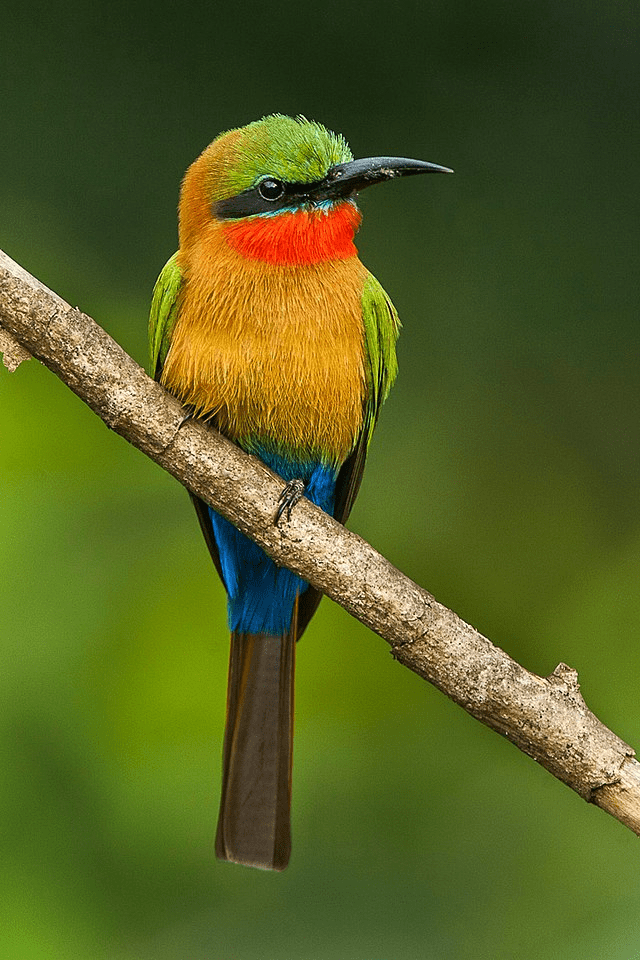
It’s time to return to the coast and our last two lodges, a trip of about 200km. On the way we pass through Farafenni, the main town on the northern border with Senegal. It is full of parked lorries, traders and beggars. We buy some pain au chocolat for lunch. We fail to locate the chocolat.
After we leave Farafenni, we approach a long bridge back over the River Gambia. This allows the connection between north and south Senegal. I wonder how it was and is paid for.
A toll bridge? I ask.
Omar: ‘Only for the Senegalese. This is not right. We are brothers.’
At this, he pulls in at the booth and pays the toll.
We link up with Jan at the Tendaba crossing and continue on towards the coast. Jan suspects he has malaria. (‘Don’t worry. It’s not catching.’) We wonder why Omar failed to mention this when he asked if we could pick up Jan on the way back.
At Brikama the roads to Mandinari and Marakissa lodges spilt. Here Jan says goodbye and gets picked up by the Mandinari staff. Ani and I look at each other, then at Omar. He goes shopping.
As we near Marakissa, Omar turns to me.
‘You must struggle in water here,’ he says.
‘?’
‘The owner doesn’t like you to drink water you haven’t bought at the lodge.’
‘Smuggle in’ then. A relief. There are crocodiles in the area.
On arrival we are greeted with a hug by the substantial Gambian hostess. Her Dutch husband sits in a chair and offers us a limp handshake and a critical glance. Adama, the lady, shows us our cabin. It seems fine but has only a dirty towel and no lock. We nick a padlock from the cabin next door and ask for a clean towel. We give her a dirty towel and she gives us a dirty look. Then we ask about the bathroom light. There is something that looks a like a lamp over the washbasin. But we can find no way to turn it on.
Adama: ‘The last guest stole it.’
Perhaps it was monogrammed. In any case, it was a thorough job. There is no light switch either. I shave while Ani holds a torch.
The lodge is beautifully located – on a river with its own private and adjoining nature reserve. And the dinner looks delicious. But it is chicken. Omar has disappeared again and for once hasn’t pre-empted us. For once, fish and chips would have been nice.
He shows up the next morning, having spent the night at home.
Ani: How is everyone?
Omar: Fine.
Self: Jan OK then?
Omar nods wisely: It’s malaria.
Self: And your Mum?
Omar: Much worse. Blood pressure very high. Bad with the diabetes. Very bad.
We remind ourselves that we should be clearer with our questions.
Before we go for a bird walk, I put my torch on charge at the reception area. There are no outlets in our room. When we return, I check on my torch. It is totally discharged and the adaptor has disappeared. I locate it plugged into a laptop. A Dutch woman appears. She seems to be related to the owner. She supervises the detaching of the adaptor from her computer and the re-attaching to my torch, which looks to have expired.
As Elton John so shrewdly pointed out, ‘Sorry’ seems to be the hardest word.
Come the evening, we ask for a blanket. It was perishingly cold the previous night.
Adama makes a comment about the hardiness of Vikings and gives a disparaging snort, before handing over another sheet. But we get a delicious vegetarian meal at dinner.
Next morning we are given a fulsome farewell by Adama and even her husband, who has not acknowledged our presence since we arrived.
As we head off, Omar warns us that it is will be very cold in the night at our last lodge.
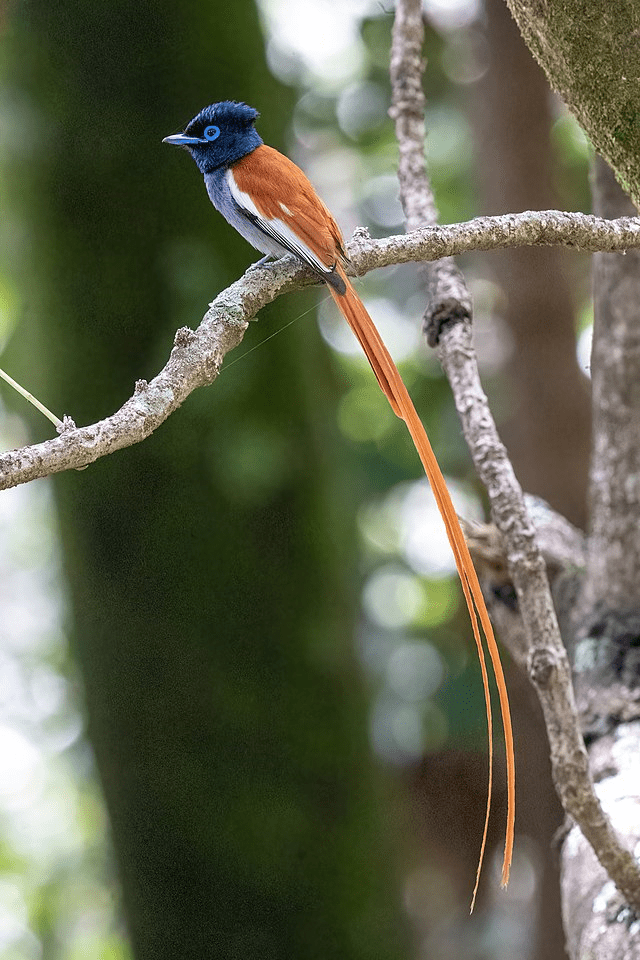
The lodge in question is called Stala and is situated outside a town called Kartong on a mangrove opposite southern Senegal. It is beautiful here and everything in the cabin works. As we enjoy a welcome drink, we sit next to Omar who is gazing lovingly at his phone. We study the menu with mounting excitement and decide on fish dodomá. Fanning myself with the menu, I ask Omar if we should order dinner in advance. ‘Later,’ he says.
Later is after a walk that takes us through the mangrove floodplain of the river. For once it is almost totally empty of birds. We walk past a factory on the shore.
‘Chinese,’ Omar says. Under very specific questioning, he reveals that the Chinese buy licences from the government, sweep the seabed clean of fish in a factory ship, process the food and send it back to China. Next to the factory stand a row of tumbledown fisherman’s huts. Most fishermen now work in the processing plant.
We return to base, determined to order our dodomá. But Omar disappears and there is no-one else around. We are served fish and chips again at dinner. I grit my teeth and point out to Omar there was a ‘bloody menu, you know’.
He shrugs an apology and says he didn’t know. He looks at me with hurt puppy eyes for the rest of our time together.
Next morning we wait an hour for breakfast without it arriving. Omar shouts at the staff. We will be late for the birds. They say the cook will be there any moment with the food. We pass him on our way out. It was a good party, he explains with a smile.
At dinner that evening we order from the menu, then sleep through the beautifully balmy night.
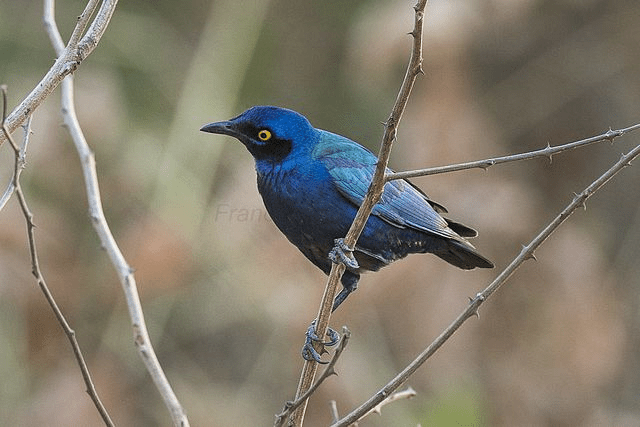
The following day we drive back to our hotel and say goodbye to Omar. The receptionist doesn’t recognise us. But the touts do. They remember our names and wonder where we have been. They greet us like long-lost friends, as does our go-to man, our cleaner Lamin.
The guys at the back are also doing fine and ask after our health.
Pap welcomes our return with a whooping chant sung in his underpants as we pass his lean-to. Bubba is also welcoming. I ask him where I can buy whisky. (My duty-free has run out but the Indian Scotch on sale here is good enough.) He offers to do it for me. In fact, he insists. I hand over some money. I know where he lives.
On our way back to the hotel we pass by to collect. He disappears inside his shack and we hear a clinking sound. He re-emerges with a bottle in a bag. I thank him and head off. When we get back I pull out the bottle. Gambian whisky. I didn’t even know it existed. It doesn’t. It is foul – sugar, water, alcohol and colouring. It takes me the whole remainder of the stay to get through it.
I hope Bubba enjoyed the bottle he’d bought with the change.
Ani spends the remaining week on the beach. I have an aversion to sand and water, so each morning after a walk, I stay in our room reading. Lamin, the cleaner, tells me of his life and family. He is from Kiang East, almost 100 km from where he works. His younger brother is at school and his father is disabled after a work accident. So Lamin is the breadwinner. He has left home for the coast to find work. Here he shares a room with another family from his village, and works his days-off making mud bricks. He sends home what money he has over.
*
The Gambia is one of the poorest nations in the world. It lies precariously near the bottom of most indexes of wealth and well-being. This is not surprising. It is a totally pointless country, separated from Senegal, economically a more viable unit, purely to satisfy Imperial rivalry and over-zealous map-drawers. Senegal and the Gambia are ethnically, culturally and religiously almost identical.
But people here somehow manage to survive. We have seen little of the oppressive head-bowing poverty that pervades Tanzania and Madagascar. I don’t know how the Gambians manage to get by. But clearly they have a talent for it.
If you look at the Happiness Index, they do significantly better than on the more brutal GDP measurement. They are amongst the friendliest people I have ever come across. Who knows? Maybe they are the ones that have got it right. After all, what’s more important? Making more money than you know what to do with? Or carrying on a lengthy conversation with everyone you meet?
I don’t know. I’m not very good at either.
But good luck to them. We won’t be back. But we are happy we went.
Thanks again to wiki commons for the pictures.
 Letters from Sweden